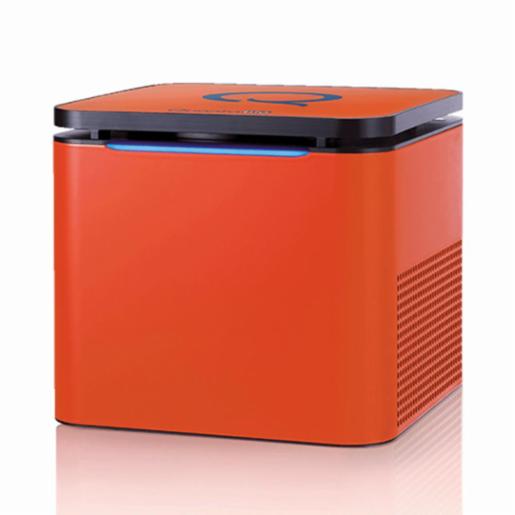
Quantabio Q4-CHANNEL QPCR INSTRUMENT 95900-4C
Quantabio -- Item TECPIM000512027
Please add to cart & request for quote to see the price
Stock Available
The Q 4-Channel qPCR Instrument (95900-4C) is a compact real-time PCR cycler designed for quantitative amplification and multiplex detection of DNA and RNA. The instrument uses magnetic induction heating with fan-forced air cooling to enable ultra-fast thermal cycling and simultaneous acquisition of four fluorescent channels for multiplex assays. Typical use cases include gene expression analysis, pathogen detection, and other qPCR workflows that benefit from rapid run times and portable instrumentation.
Key Features:
- Model/Part: 95900-4C
- Optical channels: 4 simultaneous channels (green, yellow, orange, red)
- Cycling speed: 35 cycles in 25 minutes (ultra-fast data acquisition)
- Technology: Patented magnetic induction heating with fan-forced air cooling
- Throughput/Connectivity: 48 samples per instrument; wireless connection allowing up to 10 instruments to connect to one computer
- Weight/Portability: Approximately 4.5 lbs (compact, portable speaker-size form factor)
Advantages:
- Rapid run times enable faster data turnaround for high-throughput qPCR workflows.
- Four-channel simultaneous detection supports multiplex assays and increases assay flexibility.
- Portable, lightweight design permits easy transport and deployment without requiring calibration.
- Magnetic induction heating reduces variability associated with block-based cyclers, improving run-to-run consistency.
Product Details
Overview
| Model | |
|---|---|
| Product Type | Consumables |
| Part Number | 95900-4C |
| Brand | Quantabio |
| Gross Dimensions (WxDxH cm) | |
| Net Dimensions (WxDxH cm) | |
| Gross Weight (kg) | |
| Net Weight (kg) | 0.1 |
Specifications
More options are available. Please contact us for more information.
Document
Videos
More options are available. Please contact us for more information.

Quantabio
Quantabio is a leading provider of advanced DNA and RNA amplification reagents for the most demanding molecular testing applications in applied, translational, and life science research. Our team leverages decades of experience in developing pioneering amplification technologies to deliver cutting-edge products to researchers focused on critical cloning, PCR, qPCR, and Next-Generation Sequencing (NGS) applications.